

The Spark Is Not Yours to Own


The best creative work does not come from control.
It comes from belief.
Belief in the people doing the work. Belief that they have something to say. Belief that your role as a leader is not to be the loudest voice in the room, but the one who creates space for others to find theirs.
This is where strong creative teams actually begin.
01 — Permission
The Spark is Already There
Most designers and writers do not need more direction.
They need permission.
Permission to trust their instincts. Permission to follow a thought before it is fully formed. Permission to take a risk without feeling like it will quietly count against them later.
When growth stalls, it is rarely because someone lacks talent. It is because that permission has been removed. The work shifts from discovery to performance. From truth to approval.
That is not a creative failure. It is a leadership one.
02 — Control
Control Flattens Teams
There is a subtle trap many creative leaders fall into.
They start designing through their designers. Writing through their writers. Solving every problem themselves and calling it guidance.
It feels efficient. It feels helpful. It slowly drains the room.
When this happens, teams stop bringing their best thinking. They wait. They hedge. They aim for what they think you want instead of what they believe in.
Good teams do not break loudly. They flatten quietly.
03 — Ownership
Empowerment Raises the Floor
Empowering creatives does not mean stepping away. It means shifting where you apply pressure.
Instead of dictating solutions, you ask sharper questions.
Instead of fixing the work, you strengthen the thinking behind it.
Instead of being the insufferable source of taste, you help others develop theirs.

When people feel ownership over their ideas, they push further. They defend their work with clarity. They care more deeply about the outcome.
That pride shows up everywhere. In the craft. In the conversation. In the final result.
04 — Signal
Their Success is the Signal
One of the biggest blockers to creative leadership growth is ego.
Some leaders struggle when their team shines. They see individual success as competition rather than confirmation that they are doing their job well.
But the truth is simple. The success of the people you manage is your success.
A room full of confident, capable creatives is not a threat. It is the point.
When designers develop their own voice, the work gains range.
When writers feel safe pushing on emotion and truth, the work gains depth.
When people believe their ideas matter, momentum follows.
The work gets better because the floor rises.
05 — Multiplication
The Question Worth Asking
So here is the real question:
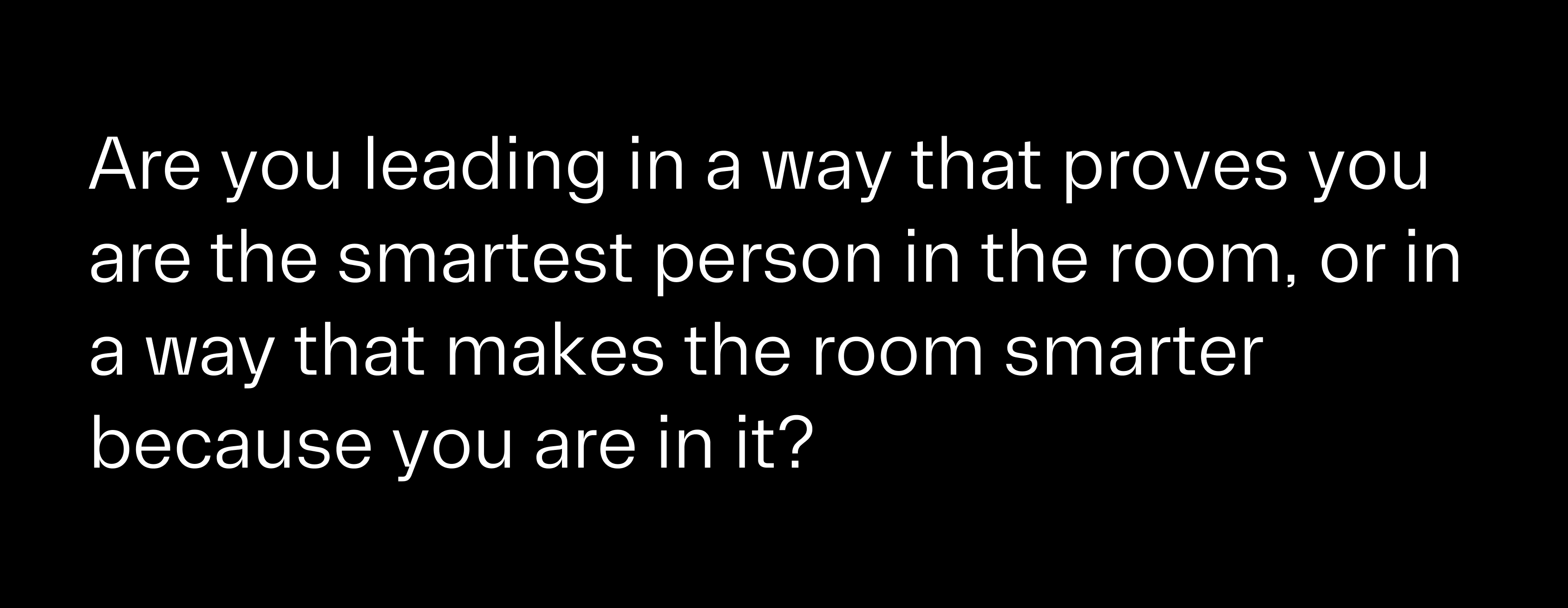
Because the job is not to own the spark.
It is to protect it, grow it, and know that when others find theirs, the entire team becomes something stronger than any single voice ever could.
When you empower creatives to find the spark within themselves, you do not lose relevance.
You multiply it.
The multiplication question you ask here is so insightful. Even if it’s not because you’re leading to be the smartest person in the room it doesn’t mean you’re actively leading to make the room smarter. This distinction is important and helpful.